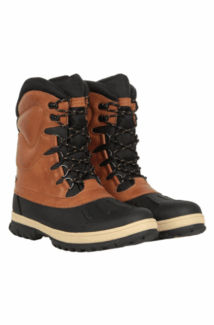
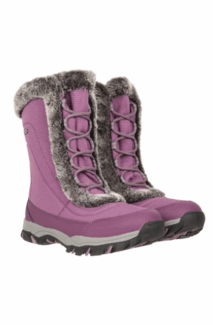
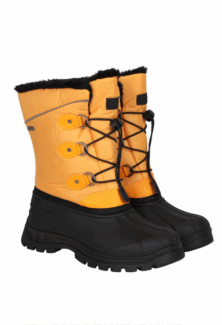
Snow boots are designed to keep feet warm in cold conditions. They are a popular choice of winter footwear in ski resorts and here in the UK.
We have put together this snow boot guide to explain the different features and help you find the right snow boots for you.
Snow boots tend to have a softer, more flexible sole than walking or hiking boots to aid traction on the ice.
Some of our Ultra range snow boots feature an IceLock outsole, which has micro-glass fibre pieces in the outsole to aid grip on the ice. It increases traction/grip on ice and wet surfaces to prevent you from slipping. The slip resistance of IceLock is six times stronger than a regular outsole.

Many manufacturers will use temperature ratings to help you choose the right snow or winter boots for your activity or destination. Temperature rated snow boots are laboratory tested for their performance.
The temperature rating refers to the lowest temperature your feet will be warm and comfortable. For example a rating of -20°C degrees means they are capable of keeping your feet warm to temperatures as low as -20°C degrees. The ratings should always be taken as guidance as there are many factors that can affect this. Health, physical activity, exposure time, correct socks, weather conditions and perspiration will all affect performance and comfort.
When preparing for a winter hike, you may be wondering if you need to start reaching for the snow boots over your regular walking boots. Quality footwear is important for a comfortable trek in any weather, but it may be even more vital in the potentially dangerous terrain of snow and ice.
We have put together a few similarities and differences to look out for below.
| Snow Boots | Walking Boots | |
|
Grip |
Snow boot outsoles have been engineered to perform better in snowy and cold weather conditions.
|
Walking boots can be worn in snowy conditions, but snow boots are better suited for this. |
|
Warmth |
All snow boots are insulated with a fleece lining. Our Extreme snow boots have a Thinsulate lining and some of our Ultra styles have PrimaLoft insulation to provide plenty of warmth. | How warm your walking boots are can depend on the type of boot, but most often it will not be as warm as a snow boot as they are designed with a mesh lining for breathability as opposed to be built for warmth. |
|
Waterproof |
All snow boots have a water repellent finish. Many have full rubber cup outsoles almost like a welly that keeps water out. Our waterproof snow boots feature a built-in waterproof membrane to help stop water from getting in.
|
Walking boots can range from non-waterproof to waterproof depending on the style. |
|
Breathability |
Because of how warm snow boots are, you may find they are less breathable than a walking boot. We recommend a high-wicking sock like our IsoCool range to wick away any sweat.
|
Walking boots can be more breathable than snow boots as they generally have a breathable mesh lining. |
Snow boots are specially designed for snowy terrains, so if you’re planning to go hiking throughout the winter or just want the security of a tight grip on an icy pavement, we would recommend investing in a pair such as the Ultra Iceberg Grip Waterproof Boots or the Bank Snow Boots.